Unit 6 – Composition
Activity 1 – Depicting sounds using Instruments
The teacher asks the students to form groups and assigns group leaders. Each group is then asked to jot down points recalling sounds and feelings, even related to a recent school outing. Each point must then be developed and associated to an instrument.
The teacher may use the example of a building site where one can find cranes, jiggers and grinders. Students are encouraged to describe which instruments would best depict these tools. The student may be asked what sounds he/she heard and what feelings these sounds evoked. Each group is guided to choose particular instruments which best depict the story. As the leader and group further develop their ideas, individual compositions are thus created. Children are encouraged to make use of different rhythmic patterns, expressions, dynamics and tempos.
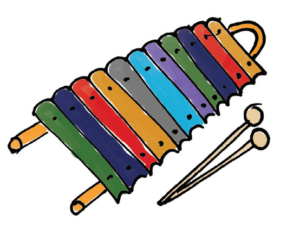
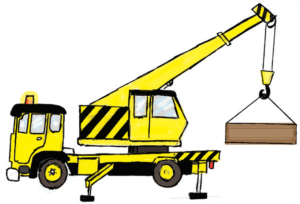
The hoisting of cranes can be depicted by glissandos going up and down on the Glockenspiel
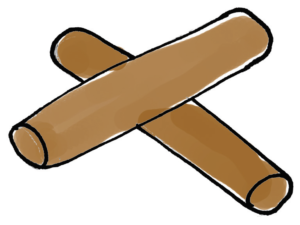
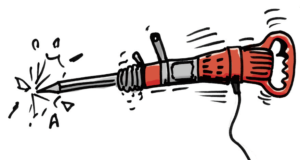
The Claves can depict the hammering of the jigger.
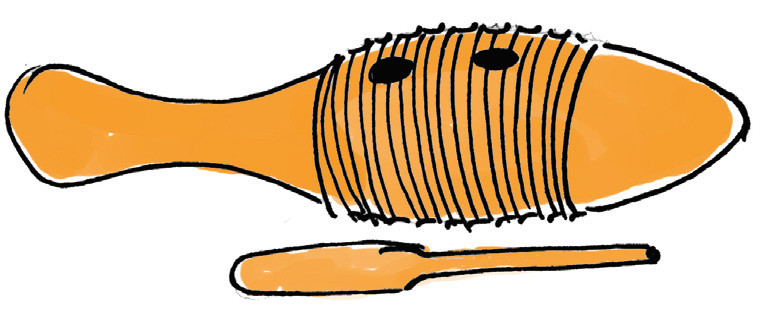
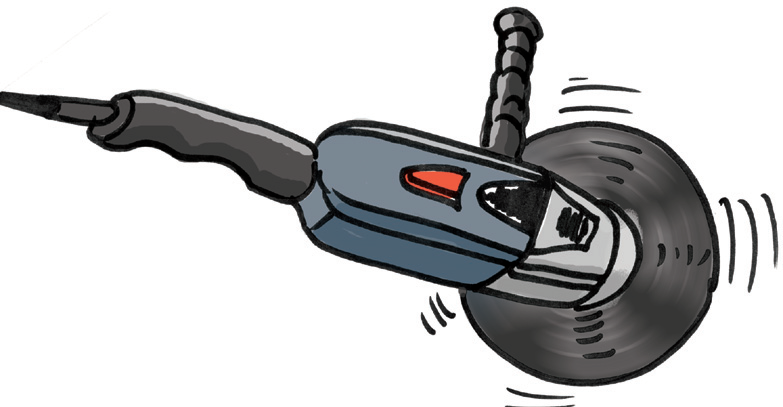
The Guiro can depict the whirling of the grinder.
Each group can further develop his work by finding pictures about his story and the instruments which were used to depict the particular sounds and happenings. Students can create classroom charts and display for everyone to see and recall.
Activity 2 – The Scale
The teacher will work towards encouraging creativity and enjoyment through more complex music writing.
Students will be introduced to a structured composition of a simple four-bar melody with secco accompaniment, making use of the Tonic, Subdominant, Dominant and Tonic degrees of the C Major scale, i.e. using I, IV, V, I, and the relevant triads for the bass part. The following resources may be used: a classroom synthesizer, xylophone, glockenspiel and any other pitched instrument on which a C major scale can be played, recorders, and manuscripts.
The teacher will explain what a scale is, speaking about its structure and its use in music composition. The students will be shown a model of the C major scale and will relate the seven respective diatonic degrees to the letter names and their Roman numerals, explaining briefly the function of each degree. The teacher can then build triads on each degree of the scale, explaining that the triads are useful to build the melody and the harmony too.
The teacher will then show the students how to create a composition. The teacher first fills in the desired degrees of the scale as the bass part of the composition, i.e. I, IV, V, and I. The student will be guided to use notes from the triads to create a melody.
The students can make use of two Treble staves also. Thus the students are guided to compose their composition in a structured form. The students can even write words to the music. They can play their compositions on the synthesizer, and possibly be familiar with simple note entry, playback and save commands using suitable music software.